
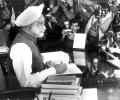
'The critical event signalling a new era for India was Dr Singh's 1991 Budget in which he quoted Victor Hugo to say that no power on earth could stop an idea whose time has come,' recalls T N Ninan.

From the 30-share blue-chip pack, ITC Hotels, IndusInd Bank, Mahindra & Mahindra, Sun Pharma, UltraTech Cement and NTPC were among the biggest gainers. Titan, Kotak Mahindra Bank, Nestle, Asian Paints, HCL Tech and ICICI Bank were among the laggards.

Budget 2025-26 delivers a carefully calibrated strategy-stimulating demand and investment while keeping fiscal discipline intact. In an environment marked by global trade disruptions, and a softening in urban consumption, Finance Minister Nirmala Sitharaman has taken a measured approach.
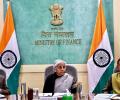
The Budget assumes significance as it comes on the back of lower-than-expected growth numbers during the second quarter and geopolitical uncertainty.

'Some buyers get carried away by festival offers and purchase higher variants or larger vehicles than they truly need, which impacts running cost and long-term affordability.'
'But this Budget alone will not fix what ails the Indian economy.'
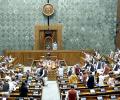
India's opposition parties have sharply criticized the Union Budget, calling it inadequate to address the country's economic woes and accusing the BJP-led government of using it to woo voters in Bihar and Delhi ahead of upcoming elections. Leaders from the Congress, TMC, DMK, SP, and CPI(M) voiced their disapproval, highlighting concerns over inflation, unemployment, and the lack of substantial measures to support the agricultural sector and the poor. They also criticized the tax cuts for the middle class as insufficient and coming too late after years of high taxes and rising prices.

The demand for passenger vehicles (PVs) is expected to sustain even beyond the ongoing festival season as a new set of customers, those who gained confidence to buy cars following the recent GST rate cuts, will begin to visit dealerships now, said Shailesh Chandra, president of the Society of Indian Automobile Manufacturers (Siam), on Wednesday.
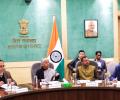
Parliament's Budget Session will be held from January 31 to April 4, with Finance Minister Nirmala Sitharaman set to table her eighth straight budget on February 1. The session will begin with President Droupadi Murmu's address to a joint sitting of the Lok Sabha and Rajya Sabha on January 31, followed by the tabling of the economic survey. The first part of the Budget Session will have nine sittings from January 31 to February 13, after which Parliament will break for recess to examine the budget proposals. The session will reconvene on March 10 to discuss the demands for grants of various ministries and complete the budgetary process, concluding on April 4.
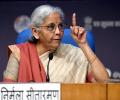
The Budget 2025-26 meets the expectations of fiscal consolidation, maintaining capital expenditure, and boosting consumption through tax cuts.

The International Monetary Fund (IMF) has said its executive board granted $1 billion in assistance to Pakistan this month after finding out that the country met all conditions and targets for it.
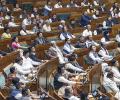
The Union Budget 2025-26 has allocated Rs 1,024.30 crore for expenses incurred by the Council of Ministers, the Cabinet Secretariat and the Prime Minister's Office, and for hospitality and entertainment of state guests. The allocated amount is a bit more than the Rs 1,021.83 crore earmarked in 2024-25.

Schemes like the Mukhyamantri Majhi Ladki Bahin Yojana strain fiscal resources amid rising unemployment and prices of food items.
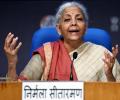
Finance Minister (FM) Nirmala Sitharaman has presented a forward-looking Budget, reinforcing the government's commitment to 'Reform, Perform, and Transform'.
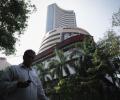
Stock markets will remain open for trading on February 1, Saturday, when Finance Minister Nirmala Sitharaman presents the Union Budget, bourses BSE and NSE said on Monday. Stock markets are generally closed on Saturdays and Sundays, except for special circumstances.

Finance ministers of states demanded an increase in allocation under 50-year interest-free loan scheme, while fiscally stressed states like Punjab and Kerala pitched for a special package and borrowing flexibility, sources said on Friday. In a pre-budget meeting with Union Finance Minister Nirmala Sitharaman, states have also urged for higher borrowing limits to support fiscal activities, besides additional funds for Jal Jeevan Mission.

'If our Budget allows, we may implement both measures -- making income up to Rs 10 lakh tax-free and introducing a 25 per cent slab for income between Rs 15 lakh and Rs 20 lakh.'

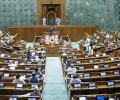
The deportation of Indians from the United States, deaths in the Maha Kumbh stampede and the joint Parliamentary committee report on the Waqf bill were among the issues that led to heated exchanges and some disruptions in an otherwise smooth first part of the Budget session that ended on Thursday.

10 largecaps stocks which stand to gain from the Budget.

The Rural Development Ministry has been allocated Rs 1.88 lakh crore in the Union Budget for 2025-26, around 5.75 per cent more than the allocation in the previous budget.

'The first and most basic responsibility of any government is to protect its people from external threats and internal harm.' 'Budget 2025-2026 has to focus on meeting this responsibility,' asserts R Jagannathan.

A string of welfare schemes and promises tests the state's budget, which is already heavily dependent on central support and spends little as capital outlay.
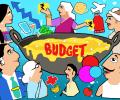
Finance Minister Nirmala Sitharaman on Saturday presented Union Budget 2025-26, envisaging an expenditure of Rs 50,65,345 crore, an increase of 7.4 per cent over the current fiscal.

'It was like rigorously preparing for a solid, good exam...' 'I don't know what marks I will get, but I felt the rigorous preparation of an exam.' 'You may sweat, but I feel rejuvenated.'
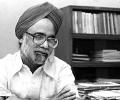
Dr Manmohan Singh, the architect of India's economic reforms, had to literally face a trial-by-fire to ensure widespread acceptance of his path-breaking Union Budget of 1991 that saw the nation rise from its darkest financial crises.
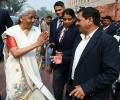
The Department of Social Justice and Empowerment has received Rs 13,611 crore in the Union Budget announced on Saturday, while the allocation for disability welfare now stands at Rs 1,275 crore.
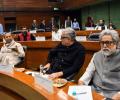
India's Parliament is set to begin its Budget session on Friday, with opposition parties poised to demand a discussion on the alleged mismanagement of the Maha Kumbh festival in Prayagraj, where 30 pilgrims died in a stampede. The opposition also accused the government of politicising parliamentary committees and pushing its agenda through its majority. The session will start with President Droupadi Murmu addressing both houses of Parliament. Finance Minister Nirmala Sitharaman will present the Union Budget on Saturday for the eighth consecutive time.
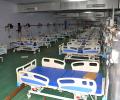
The Union health ministry has been allocated Rs 99,858.56 crore in the Budget 2025-2026, an around 11 per cent hike over the Rs 89,974.12 crore in the budget (revised estimates) of 2024-2025 with the government announcing setting up daycare cancer centres at all district hospitals over the next three years.
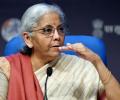
Paraphrasing Abraham Lincoln, Finance Minister Nirmala Sitharaman on Sunday described the Union Budget as "by the people, for the people, of the people", and said Prime Minister Narendra Modi was fully behind the idea to cut taxes for the middle class but it took time to convince the bureaucrats. "We have heard the voice of the middle class" who had been complaining about their aspirations not being met despite being honest taxpayers, she told PTI in an interview.

You don't need a six-figure salary to build wealth -- you need discipline and a smart plan, says Ramalingam Kalirajan. and shows you how

New lower GST rates kicked in from Monday, resulting in a slashing of prices of as many as 375 items ranging from toothpaste and shampoo to cars and television sets, a move seen as an attempt to boost consumption to cushion an economy facing tariff headwinds. Tax rates of 5, 12, 18, and 28 per cent have been clubbed into two rates of 5 per cent and 18 per cent, resulting in a reduced price of 99 per cent of daily use items.

'Ek baar aap GST dekh lo!' - Prime Minister Narendra Modi's gentle nudge to Finance Minister Nirmala Sitharaman in December last year sparked the beginning of a mammoth exercise to overhaul the tangled goods and services tax regime. And the final outcome is a significantly simplified system with lower tax rates and easier compliance for businesses.

'That is going to have an impact on literally every one, whether you buy a toothpaste, a safety pin, a car, shoes or medicines or you go to a diagnostic centre.'
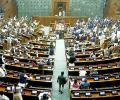
The government has also listed three new bills for the session -- 'The Protection of Interests in Aircraft Objects Bill, 'Tribhuvan Sahkari University Bill', and the 'Immigration and Foreigners Bill'.

Recent documents by NITI Aayog and periodic labour force surveys on employment show that the importance of agriculture is rising in the Indian economy.
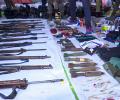
The Union Budget 2025-26 has allocated Rs 3,481.27 crore for security-related expenditure (SRE) and the Special Infrastructure Scheme for Left Wing Extremist (LWE) areas. The BJP-led Centre has set a target of March 2026 to end the Maoists menace in the country. The allocation is considered significant in the wake of Union Home Minister Amit Shah's repeated statements that the Narendra Modi government has resolved to end Naxalism in the country by March 2026. This year, till January-end, 40 Naxalites have been killed in separate gunfights in the worst Naxal-hit state of Chhattisgarh. Last year, 219 Naxalites were neutralized by security forces in separate encounters in Chhattisgarh. Six Maoists were killed in Odisha in 2024, while eight were arrested and 24 had surrendered. According to the home ministry's data, 48 Naxals have so far been killed this year in all Naxal-affected states, 290 were killed in 2024 and 50 in 2023. The government has also established 290 camps of security forces in Naxal-affected areas since 2019 and 88 more are proposed to be set up in 2025.
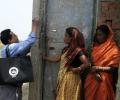
India's decadal census is likely to be further delayed after the budget allocated only Rs 574.80 crore for the exercise, a significant reduction from previous years. The census, originally scheduled for 2021, has been postponed due to the COVID-19 pandemic, and the government has not yet announced a new schedule. The budget allocation suggests that the exercise may not be carried out even after the delay. The upcoming census will be the first digital census, allowing citizens to self-enumerate using a dedicated portal. The exercise will be made compulsory for citizens who wish to self-enumerate, and Aadhaar or mobile numbers will be required. The census will include questions on household demographics, amenities, and economic status.

'There's a misconception that all Rs 1 lakh crore will be spent immediately, leading to higher consumption of FMCG goods, travel, and vehicle purchases.' 'While some of this money will go toward consumption, not all of it will.' 'The impact depends on where people deploy their savings.'
 © 2026 Rediff.com - Advertise with us - Disclaimer - Privacy Policy - Sitemap - Feedback - About us - Terms of use - Grievances